The French café is not simply a place to drink coffee. It is a public room — an extension of the street where people read the newspaper, meet a colleague, argue about football, or sit alone with a notebook for an hour without anyone asking why. Understanding this changes how you use cafés during a trip: less as a quick caffeine stop, more as a way of participating in daily life.
Café, Brasserie, Bar: What the Sign Means
These terms overlap, but they still signal something useful. A café typically serves coffee, tea, soft drinks, and light food — a croissant in the morning, perhaps a simple lunch plate at midday. Many cafés serve alcohol as well, but their identity leans toward daytime socializing.
A brasserie usually implies fuller meals, beer on tap, and longer opening hours. Brasseries often have a more formal dining room alongside a bar counter. In Paris and larger cities, historic brasseries retain art-deco interiors and set menus; in smaller towns, the word may simply mean a reliable place for steak-frites and a half-liter of beer.
A bar focuses on drinks. Wine bars (bars à vin) and cocktail bars occupy their own niche, but the classic neighborhood bar is where regulars stand at the counter for an espresso swallowed in two sips — the inverse of the terrace culture described below.
Terrace Etiquette
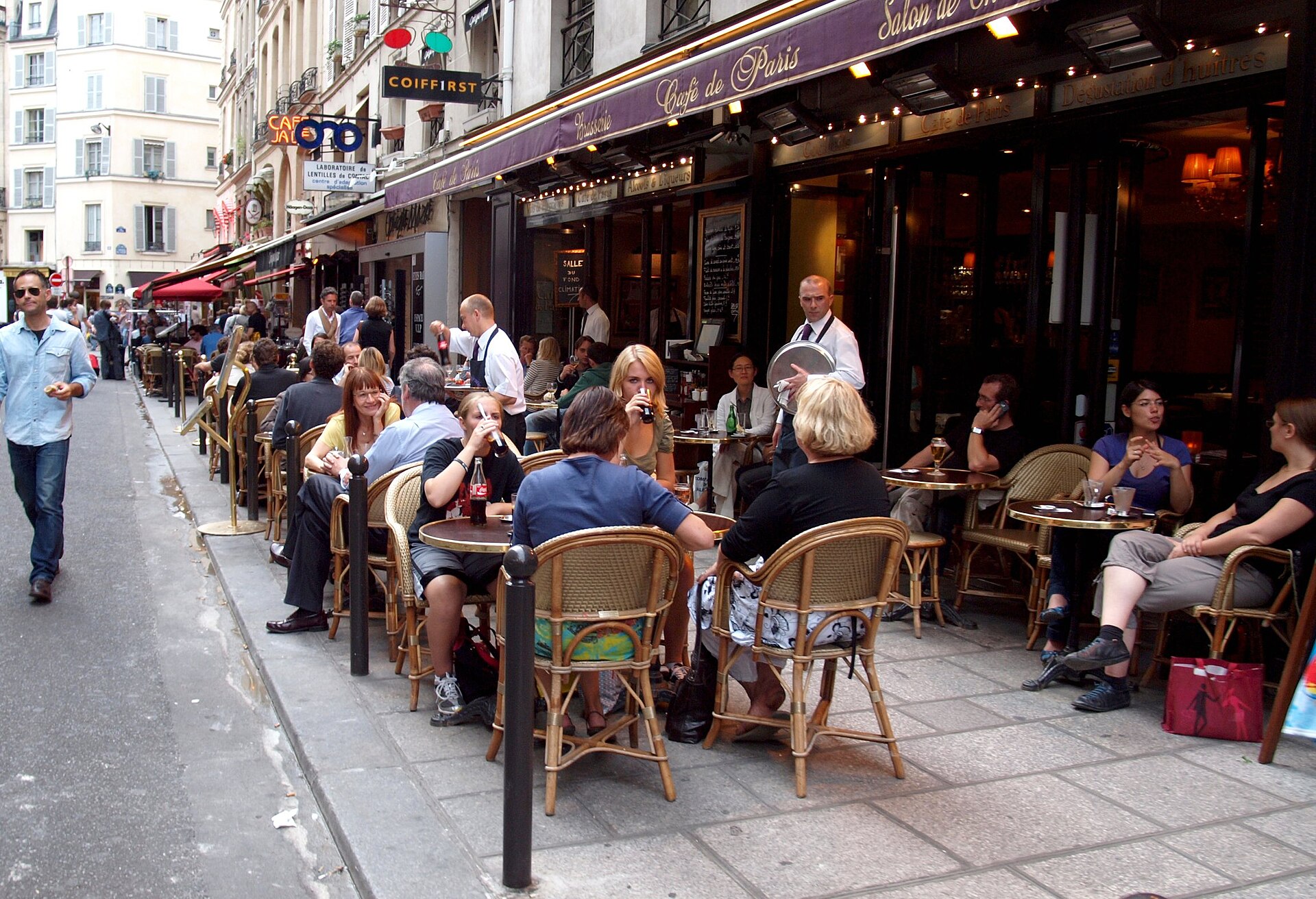
Sidewalk tables face outward toward the street by design. You are meant to watch the world pass. When you sit down, wait for a server rather than entering and choosing a table yourself unless the setup clearly indicates self-seating. In busy tourist zones, staff may approach quickly; in quieter neighborhoods, patience is normal.
Prices sometimes differ between the bar counter and the terrace. Menus usually note consommation au bar versus en terrasse. The terrace premium buys time and space — you are renting a chair in public view, and nobody will rush you to leave after one coffee. That unhurried right to occupy a table is central to café culture and one reason locals tolerate higher prices outside.
Smoking on terraces remains common despite indoor bans. If you are sensitive to smoke, choose a table upwind or sit inside.
Ordering Coffee
French coffee vocabulary is precise. An expresso (often spelled without the x in France) is a small, strong shot. A café allongé is espresso with added hot water, closer to American filtered coffee but still smaller. A café crème is espresso with steamed milk, similar to a latte. Noisette adds a dash of milk. Grand crème is a larger milky coffee, typically served in a bowl-sized cup at breakfast.
Filter coffee is not the default. If you want it, ask for café filtre; some places will not serve it, especially outside major cities. Decaffeinated coffee is available as café décaféiné or simply un déca.
Milk-heavy coffees are traditionally morning drinks. Ordering a grand crème after dinner is unusual — not forbidden, but a sign you are thinking like a visitor rather than a local. After a meal, an espresso alone is the norm.
When Cafés Open and Close
Many cafés open early for breakfast — sometimes by 7 a.m. — and serve through the evening. Exact hours vary by municipality and license. Rural cafés may close mid-afternoon on quiet days; city terraces often stay open until midnight or later. Do not assume every café serves food all day. Kitchens frequently close between lunch and dinner service, even if drinks remain available.
On public holidays and in August, when many French workers take vacation, neighborhood cafés in Paris and other cities may shut for several weeks. Smaller villages sometimes have only one café; if it closes, the social center of the village moves temporarily to the bakery or disappears altogether.
The Café as Social Infrastructure
Before mobile phones, the café telephone and the morning regulars' table performed functions now scattered across apps and co-working spaces. Something of that role persists. Municipal elections are argued over at zinc counters. Delivery drivers pause for ten-minute breaks. Writers still work in cafés, though laptops are accepted more readily in some neighborhoods than others.
In villages, the café may be the only business open after dark. Its survival is a practical concern for residents, not a romantic detail. Tourism helps in some places; in others, rising rents have replaced independent cafés with chain brands that look similar but feel different — faster turnover, less conversation.
For visitors, the practical lesson is simple: choose a café where people are talking to each other, not only photographing their cups. Sit down, order something modest, and stay long enough to notice the rhythm. That is the point.
Related reading on this site: French dining customs, Paris beyond the classic sights, and a weekend in Paris.